Showing posts with label plastic flooring. Show all posts

Wednesday, August 29, 2018

Rubber, Plastic and Foam Flooring Myths

There are many common misconceptions regarding rubber, plastic and foam flooring. Below are the nine most common specialty flooring myths, debunked:

Myth #1: Rubber flooring will add cushion and spring to your floor.
Rubber used for flooring is generally a very dense material. It provides thermal insulation and protection for the base floor, as well as absorb sound in the room. While it does those, it’s generally provides much less cushion than plastic or foam flooring. Keep in mind that most of these floors are made from recycled truck tires. Truck tires must be fairly rigid to withstand the rigors of tens of thousands of miles of travel. Any material that was soft enough to provide cushion to athletes wouldn’t be able to stand up to the demands of automotive use.

Flooring myths
Flooring myths


Myth #2: Plastic flooring is hard.
It’s commonly thought that for a flooring material to be soft and flexible, it has to be made of rubber, but that just isn’t the case. Part of the beauty of plastic is that it comes in a wide range of hardnesses options. Most plastics used for flooring provide significantly more cushion than rubber floors and are commonly confused with rubber, due to their pliability.

Myth #3: All foams make good anti fatigue flooring
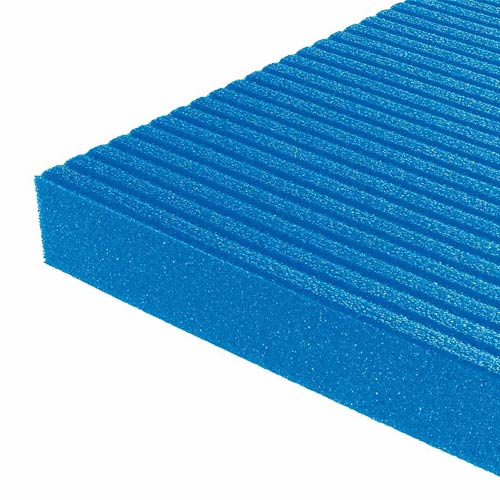
While foam does provide excellent cushioning and adds comfort to your flooring surface, not all foams are created with the same density, which is key for anti-fatigue benefits. Standing for long periods of time on hard surfaces can be taxing on the body, but so can extended periods of standing on surfaces that are too soft. Some foams are so soft that they provide very little resistance between you and the hard floor below. Others will keep you off the hard floor, but provide very little stability, increasing the risk of you losing your balance when standing on it. It’s important to ensure that any anti-fatigue flooring solution provides enough cushion to encourage shifting of position. This is important because it increases blood flow will still making standing on the flooring comfortable.
rubber flooring bounce


Myth #4: Rubber flooring is great for all athletic purposes.
It is true the rubber flooring is commonly used in athletic flooring applications. Rubber flooring is a great choice for use in gyms where the floor needs to be able to support the weight of exercise equipment and dropped weights. It isn't a great plan to use rubber flooring for areas where people will be running, changing direction and spinning however. One of rubbers best features is that it is slip resistant, but with activities such as basketball or dance, a certain level of slipping is necessary for safety, and rubber floors are usually too grippy to allow much slippage. If rubber is used for these types of activities, it can lead to an increased risk of athletes injuring their knees or ankles.

Myth #5: Foam floors contain rubber.
The majority of all foam flooring is made of of EVA or Polyethylene foam. Even though both of these material are very pliable, much like rubber, they do not contain any rubber. Foam rubber is a spongy material in which rubber has been manufactured with a foam agent to add air to the material and lesson its density. Commonly referred to as a “foam rubber”, it is commonly found in mattresses and furniture cushions but is not durable enough to be used in flooring.

Myth #6: Plastic floors are slippery.
The surface texture makes a world of difference in how slippery a floor can become when wet or dusty. Smoother surfaces will carry an increased risk of being slippery. Plastic floors often feature leather or orange peel type textures to provide traction as well as diamond and raised bump, non-skid patterns.

soft rubber flooring

Myth #7: Rubber floors are waterproof.
While rubber is very moisture resistant, most rubber flooring is made of ground automotive tires and can be slightly porous. This allows for water to ever-so-slowly permeate through the rubber. If power washed, the water is blasted into these tiny pores and forces them open, allowing the water in. If repeatedly power washed, water can become trapped within the rubber flooring and possibly even damage the flooring.

Myth #8: PVC and Vinyl flooring are completely different.
Vinyl is often the shorthand way of referring to Polyvinyl Chloride (PVC). The term ''vinyl'' actually includes a broad range of thermoplastic chemical compounds that includes EVA, PEVA, PVA and PVB as well as PVC. PVC is unique from other vinyls because of the addition of the chlorine molecule to the chemical structure, which makes it highly fire retardant.

rubber flooring fatigue relief

Myth #9: Rubber flooring is just as good as plastic for garages
Rubber flooring is commonly used as an inexpensive alternative to PVC or Polypropylene garage flooring. If the garage isn’t being used for automobiles, then this is fine. There are some downsides to using rubber flooring when, cars, trucks and even trailers are involved, however. While rubber is strong enough to handle the weight of vehicles, some rubber floors can sometimes experience chemical reactions to some automobile tires, oils and other chemicals associated with internal combustion engines. These interactions can lead to the rubber breaking down and in turn shorten the lifespan of the flooring.

Rubber plastic, and foam are all great flooring materials, but they each have their ideal use cases and proper research should be conducted to make sure the best flooring is chosen for an area.

Thursday, July 26, 2018

Top 11 Eco-Friendly Flooring Materials

When laying out your next flooring plan, consider the use of eco-friendly materials for your project. There is a wide range of eco-friendly flooring options on the market today that are made with materials that don’t compromise on form or function, all while still benefiting the environment. There are many factors that go into not just which recycled material to choose, but what makes certain forms of flooring environmentally friendly.
Among the options to consider are sustainability, recycled content, reclaimed materials, recyclability, carbon footprint, transportation and toxic content. Then there is the aesthetic, comfort, health, safety and durability components of making your flooring selection. Explore the content below to see the various options for recycled and eco-friendly flooring.

Rubber
Pros: Rubber flooring is a common flooring choice for gym and playgrounds, but has been becoming more popular in kitchens due to its durables and anti-fatigue properties. Made from ground up tires, rubber floors are durable, low maintenance and comfortable to stand and walk on. Rubber floors protect the existing floor beneath them as they are both impact and water resistant. Recycled rubber also serves as a thermal and sound insulator and is fire resistant. Rubber flooring is available in a wide range of colors and pattern options, allowing for the rubber flooring to be a creative accent in a modern home design.
Cons: Many rubbers can emit gasses and odors, making well-ventilated areas the typical location for rubber floors. Many rubber flooring products are designed with a non-slip top texture, untextured rubber flooring can become slippery, particularly when wet.  It is also susceptible to seepage and staining issues if not cared for properly.

Recycled Flooring Material
Green Flooring Materials


Cork
Pros: Cork flooring offers a unique blend of being both a recycled product and a sustainable one. Recycled cork flooring is typically made from the excess cork that is created during the cork bottle stopper manufacturing process. Cork flooring is also made from a material that is naturally replenishable. Cork is carefully harvested from the bark of a cork oak tree, which can grow back its bark in approximately three years. This material is not only fire retardant, it also has natural insect repellent and antimicrobial properties, reducing allergens in your home. Cork flooring has a natural elasticity to it that allows the flooring to have some ‘give' when it’s stepped on, thus making cork flooring a comfortable flooring material. It also provides both thermal and acoustic insulation and recovers well from marks and indentations left by high heels or furniture.
Cons: Unfortunately, cork trees only grow in a limited geographical area in the Mediterranean so careful harvesting is a must. Cork flooring is soft and comfortable to stand on, but because of that it can also be damaged by sharp objects such as dropped knives and pet nails. Permanent indentation can occur if heavy furniture sits on it for a long period of time. Cork is water resistant, but spills need to be quickly cleaned up as liquid left on the cork surface for long will absorb into the flooring.
Cork flooring is not recommended for use in basements or over in-floor radiant heat systems.
Note: Some manufacturers have created rubber-cork blended flooring.

fire resistant floor material
Fire Resistant Flooring Materials

PVC plastic
Pros: While not typically viewed as environmentally friendly, PVC flooring can be a good option for green flooring as some manufactures have been able to use recycled plastic material to make a high quality, durable floor covering such as the black Staylock tiles sold at Greatmats.com, which consist of 100 percent recycled material. PVC flooring tiles can also be recycled again once they reach the end of their lifetime. Using plastic flooring tiles can also eliminate the need for adhesives, further helping prevent the need for new petroleum-based products to be created.
Cons: PVC is a synthetic material and is much harder to give an natural looking appearance.

Eco Friendly Floor
Eco Friendly Flooring

Bamboo
Pros: Bamboo is harder than any hardwood flooring option, and bamboo grows quickly in the wild, making it a sustainable and popular green flooring option. This durable grass grows to maturity in 3-6 years and is very lightweight. Bamboo floors are resilient, easy to maintain and easy to install and come in a wide array of colors. Quality bamboo flooring is also water, mildew, and insect repellent, thus making bamboo flooring a long-lasting flooring option. Bamboo’s hardness allows for it to be highly crack resistant.
Cons: Of the thousands of varieties of bamboo available, very few are appropriate for flooring. Low quality bamboo flooring is sometimes made with improper varieties of bamboo, and this flooring is of an inferior quality and will not stand up to the demands of flooring. Bamboo flooring made with improper varietes is known to shrink, cup, and delaminate after installation. Bamboo flooring cannot be used over in-floor radiant heat systems.

Concrete
Pros: Often used as structural sub flooring, concrete can serve double duty when polished or tinted for a finished look. Concrete can also create a tiled effect using different colors. To create more design possibilities, other materials such as glass can be inlaid into the concrete. Polished concrete is durable, easy to clean and will not conceal allergens such as dust or mold. Concrete is also an amazing heat conductor and thus is a common flooring option for use with a radiant floor heating system.
Cons: Concrete offers little-to-no physical comfort value as a hard, unforgiving surface.

Linoleum
Pros: Often confused with chemical-based vinyl, Linoleum is created with natural materials including linseed oil, cork dust, tree resins, wood flour, pigments and limestone. Linoleum is water resistant and fire retardant, making it a safer and durable flooring option. Natural linoleum is allergy and asthma friendly as well as being biodegradable. Linoleum can also be used in spaces that are often too loud as it works as a sound absorbing flooring material.  
Cons: Linoleum must be polished to resist stains. While the linseed oil is non-toxic it does emit aldehydes that may produce an odor.

Reclaimed or Salvaged Wood
Pros: Reclaimed Wood reuses existing wood from trees that died long ago. The wood can be reclaimed from trees that were previously chopped down, dead standing trees, or lumber taken from deconstructed buildings. Reclaimed wood gives a rustic look and gains character from imperfections such as streaking, nail holes and knot holes.
Cons: Some woods are not appropriate for radiant floor systems as it may cause them to warp or split. If the reclaimed wood needs to be transported a far distance to where it will be used, the environmental benefit may be outweighed by the emissions from its transport and the monetary cost of transporting the wood.
Note: Engineered wood floors can provide increased durability, but may also contain formaldehyde.

Natural Fiber Carpeting
Pros: There are several options for carpeting made of natural materials - such as wool, hemp, sisal, jute, seagrass, linen, coir and cotton. Wool is extremely long lasting and durable. It can also be dyed in any color, allowing for endless customization. Wool repels water and serves as a good insulator while also being fire resistant. A wool-hemp blend adds in mold, mildew, pest and UV resistance. Grass-based carpeting is versitilie, easy to install, and affordable. It's also made from sustainable materials.
Cons: Carpeting in general, collects dust, dander and chemicals and absorbs gases. Wool carpeting is only suitable for use in dry and well ventilated areas.  It is not a good choice for areas such as bathrooms. Grass-based carpeting is not highly durable and can deteriorate if exposed to sunlight and water for extended or repeated periods. It also has limitations to color varieties as some can not be dyed.

Terrazzo
Pros: Terrazzo is made of small pieces marble, granite, glass, etc. set in concrete or an epoxy-based adhesive. This flooring material is extremely durable, nearly indestructible, and is expected to last for over 40 years of heavy use. Terrazzo typically won't chip, stain, burn or support bacterial growth and has endless design possibilities. Terrazzo can also be recycled after its useful lifet
Cons: Terrazzo is durable, but because of that it is very hard and isn’t suitable for standing on for long periods of time. Epoxies often contain forms of volatile organic compounds which can be harmful to air quality.

Recycled glass
Pros: Making use of used wine and beer bottles that could otherwise fill up a landfill, glass tiles are non-absorbent, meaning they won't mold or mildew in damp environments. Glass tiles come in a huge array of color options, allowing for infinite customization. Glass also won’t stain. Glass reflects, light providing extra illumination for otherwise dark rooms.
Cons: Glass can be fragile to dropped objects and isn’t impact resistant. It also can cause body fatigue as an unforgiving, hard surface.

Leather
Pros: Leather flooring provides a soft, warm feel underfoot. This makes it a perfect flooring material for bedrooms and other area of the home where there won’t be heavy foot traffic and is commonly stood on with bare feet.  Like reclaimed or salvaged wood, leather also provides character as it ages.
Cons: Leather is not moisture resistant, making it a poor choice for areas such as kitchens, bathrooms or basements.

Flooring options made of recycled materials can go on and on. Recycled flooring comes in a wide range of forms. Carpeting can be made from recycled plastic bottles and used vinyl. Hard flooring can be made from reclaimed bricks or collelstones.  Even standard vinyl or ceramic tile floors can be recycled and used again. With such a wide array of environmentally friendly flooring options on the market today, there is little reason to not save some money and help the environment by giving eco-friendly flooring a try.

What Kind of Floor Should I Exercise On?

There are numerous benefits to exercising regularly, but it takes discipline to keep up with it. If you're exercising on the wrong type of floor, you could risk injuries, unnecessary pain, and overall discomfort that makes it even more difficult to motivate yourself to exercise regularly.
Kind of exercise flooring
Kind of exercise floor


It doesn’t matter whether it’s about working towards keeping a New Year’s resolution, or just to lead a healthy lifestyle, having a home space to exercise is key to keeping up a routine and truly reaping the benefits of exercise. Greatmats has numerous options for home gym and exercise flooring.


Choosing the Right Exercise Floor for Your Needs
We wish we could tell you the perfect workout floor for home use, but the truth is that the right flooring for your needs will depend on a number of different factors. Below are a few considerations that our flooring experts recommend keeping in mind when choosing flooring that will be best suited for different use types.

Types of Exercise
The first thing that should be considered is the various kinds of exercise that the floor will be used for.


- High-impact activities, like exercise involving lots of jumping or repetitive movements, is hard on your joints and on your body. Ideal flooring will provide the firmness that’s needed to push off from a jump or leap, but will still absorb some of the shock of the impact when landing. Good shock absorption is particularly important, since it can help to prevent injury and will increase your overall comfort.


- Floor exercises, like sit-ups and most yoga positions, require a fitness floor that provides extra cushion and comfort without sacrificing stability. Personal exercise mats are made with foam that has enough give to it so that it can offer the comfort and support that is needed for exercises, while still helping avoid pressure points on the body during floor exercises.


- For weight lifting, you'll need a completely different type of flooring. Weight lifting demands a dense, strong fitness floor that can help to protect your subfloor and cut noise while maximizing your output. Typically rubber mats, tiles, and rolls are the most popular flooring option for weight lifting as they are dense and durable, allowing them to be strong enough to withstand the shock of dropped weight. This is particularly true of thick rubber mats.
flooring home gym ideas
home gym flooring ideas


- Martial arts training requires a flooring that offers superior shock absorption with a proper level of firmness and traction. For some disciplines, you'll need to carefully choose a floor that can absorb much of the impact of a throw, helping to keep you safe and reducing the chance of injury. Greatmats has a wide selection of martial arts tiles that were designed with specific disciplines in mind. Folding gym mats can sometimes also be used for martial arts flooring.


Amount of Traffic
You'll want to consider how much traffic your fitness floor will see. Flooring that will be used in home gyms and workout spaces won’t need to be nearly as durable as products that would be installed in a commercial gym. Be sure to choose a product that is highly durable. Many of the products that Greatmats sells include best-in-class warranties. Some product are also reversible, allowing for both sides of the flooring product to be used, thus increasing the life of the product.


Traction Needs
When choosing a fitness floor, traction can mean the difference between a successful workout and one that ends in a slip and an injury. While the actual surface of the flooring product is an important consideration in itself, the type of shoes that will be used while working out on the flooring is the other half of the traction equation.


Then, consider the types of activities that the floor needs to provide traction for. If the flooring is going to be used for yoga, then the flooring should have a little less grip than for a higher impact workout such as Jazzercise.


Exercise Equipment
Will exercise equipment be used in the workout space? If so, choose fitness mats that are strong enough to support the weight of heavy exercise equipment without being damaged.


Foam mats and tiles are a popular flooring choice for home gyms due to their comfort, ease of installation, and affordability. However, most foam workout mats are so soft that placing a heavy piece of equipment on them can cause permanent indentations if left for long periods of time. Some higher-density foams and plastic products may be suitable, but if you'll be working with heavy equipment, then investing in a rubber mat may be the best option. Rubber is incredibly durable and provides excellent support to exercise equipment, so there will be no concern that the flooring will be damaged by the gym equipment.

If there will be exercise equipment in the room but more comfortable flooring is needed elsewhere in the room, placing a rubber mat underneath the exercise equipment but using softer flooring as the primary flooring material is a practical way to get the best of both without having to install two floors.


Location. Location. Location.


You'll also need to think about the location where you'll be installing the flooring. If the flooring is going to used in a basement there are unique considerations that may need to be made. Many basements have moisture issues, so it's important to choose a flooring that can withstand moisture. Most of the flooring options offered by Greatmats are waterproof, making it easy to pull up the foam flooring tiles and allow the floor underneath to dry out.


Alternatively, we offer a selection of plastic tiles with a raised plastic base. This raised base allows air and moisture to freely circulate beneath the tile, speeding drying and helping to eliminate mold and mildew. These tiles are a great choice for damper areas where moisture build up will be a concern.
floor mats for exercise rooms
floor mats for exercise room


If you're working with a concrete subfloor, then you'll also appreciate how foam flooring can help to suppress the cold from permeating up into the floor. This allows the flooring to be a comfortable workout area year around, allowing New Year’s resolutions to be kept during even the coldest of Januaries.


Temporary and Permanent Options
Don't have a designated exercise room at home? Greatmats offer many personal exercise mats that are portable and temporary, allowing any space in a home to be used as a workout area. You don't have to dedicate an entire room or space to just working out, since you can pull up the flooring, relocate it, or store it between uses. This is a perfect solution for those who only have access to a multipurpose room in a home that can’t be converted into a dedicated room.


If you are lucky enough to have a designated space for your home gym, then you'll have a wide variety of options to choose from. Tiles, folding mats, and rolled rubber flooring are all great options for use as permanent gym flooring. There are also numerous products that can be installed temporarily.


Ease of Installation
Will you be installing your fitness floor yourself? Greatmats offers many products that are easy to install, and that can make for simple DIY projects right in your own home. Greatmats offers a wide range of workout flooring options that range from personal exercise mats that can be simply rolled out of unfolded, to interlocking tiles that can easily be installed by fitting together like puzzle pieces.


Most of our products are conveniently sized, so they're easy to carry into your home. Our tiles and personal workout mats are small and lightweight, allowing them to be transported through narrow hallways and down stairs, both considerations that are important for metropolitan living.
floors for exercise rooms
flooring for exercise room


Rolled rubber is a heavier option, and requires a bit more of an involved installation. If rolled rubber flooring is the right option for a room, multiple people will be needed to handle and install the rolls as each rolls is too heavy for one person to safely carry. Rolled rubber results in fewer seams in your floor than you'll see if you use tiles, and it may be a more budget-friendly option when you're working with a larger area. Many homeowners still choose to purchase tiles over rolled rubber as they’re easier to transport and install with one of two people.


Almost all of our products can be trimmed to fit the area that you're installing them in. Some tiles are available with border pieces, so you can create a clean island installation. Most other can simply be trimmed with a straight edge or sharp utility knife.


Budget
Your budget will also factor into determining which workout floor is right for your needs. At Greatmats, we work to provide a versatile selection of budget-friendly options. Our product team carefully considers many options when choosing what products we offer, allowing our customer to have the most choice possible. Our direct relationships with manufacturers allows us to never sacrifice quality for cost, while still offering highly competitive pricing on all our products. Plus, we offer a price match guarantee. We're confident that you'll be happy with any exercise floor that you choose at Greatmats.


Please be sure to use our Pro Floor Designer as you plan out your exercise floor. This online tool can help you to design your floor, using the actual dimensions of your space. The tool will help in determining the amount of product needed to cover a room, allowing for informed decision making about cost and quality of flooring needed.
exercise flooring
exercise floor


Buying Your Fitness Floor
Are you ready to purchase your new fitness floor? Please contact our customer service team. Greatmats flooring experts are available to provide live help, product samples, and shipping quotes. They are incredibly knowledgeable about the different options available on the market today and can help choose the best flooring for any specific situation.